
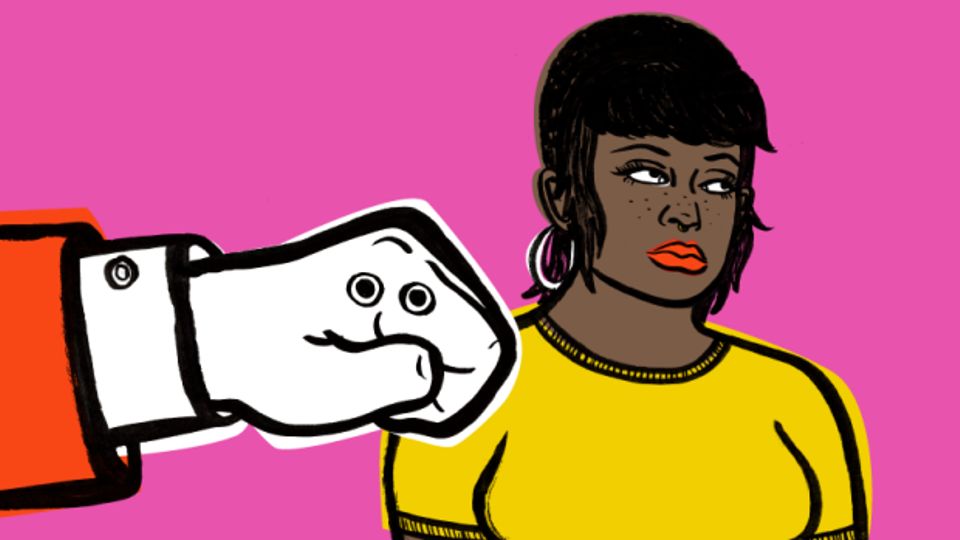
At the burgeoning age of 18, my then dream job took an interesting turn when a man easily 3x my age decided to make me cry. I didn’t reveal my tears to him. I turned tail, gathered myself and reported his hostility to my director, Jacque. After all, she had sent me in there. As assistant counselor, I was to gather a.m. snack from the day camps cantankerous line cook. Upon entering his kitchen I excused myself for the intrusion, and detailed Jacque’s request. I was promptly “put in my place” as he explained where I should and shouldn’t be, and what he would and wouldn’t do. When Jacque got word of his “attitude,” she made a decided point to remind him who he does and might not work for if he keeps it up. Try as he might to strong-talk his way out of the dressing down, Jacque didn’t budge. Directing the school that her family owned gave her an irrefutable advantage. I shed a few tears in an empty classroom before vowing to never waste emotional energy on a professional situation. Watching Jacque’s power move in action inspired something in me long before I’d set course for my own future career.
So on days like today, as I administer yet another cognitive assessment in a trauma patient’s room, I don’t get too ruffled when the patient’s father strolled into MY workspace dismissively without acknowledging the assessment in progress. And after I introduce myself and my intentions, I let it slide when he interrupted the assessment yet again, this time giving hints to his son on a memory test. But the third interruption is not tolerated. My tone sharpens, my gesture an unmistakable ‘stop’ and my words reminding him of the severity of his son’s injuries and the importance of documenting his strengths and challenges. “Please sir STOP. Cues, and time taken to respond are part of the assessment.” He was silent for the remainder of my visit, but tried one last time to chime in with a “well ya see, when. . .” as I began to explain the test results. Before he can get started, I detail to his young son the importance of acknowledging potential future difficulties as they arise. A hospital room assessment isn’t always sensitive enough to detect the kinds of challenges someone might encounter later at home or at work after a mild concussion. Everyone smiles, nods, thanks me, and off I go. I think Jacque would be proud; mansplaining crisis averted. Happy Women’s History Month!

 Bilingual SuperNoVAs